

The Complete Guide to Local SEO for Small Businesses
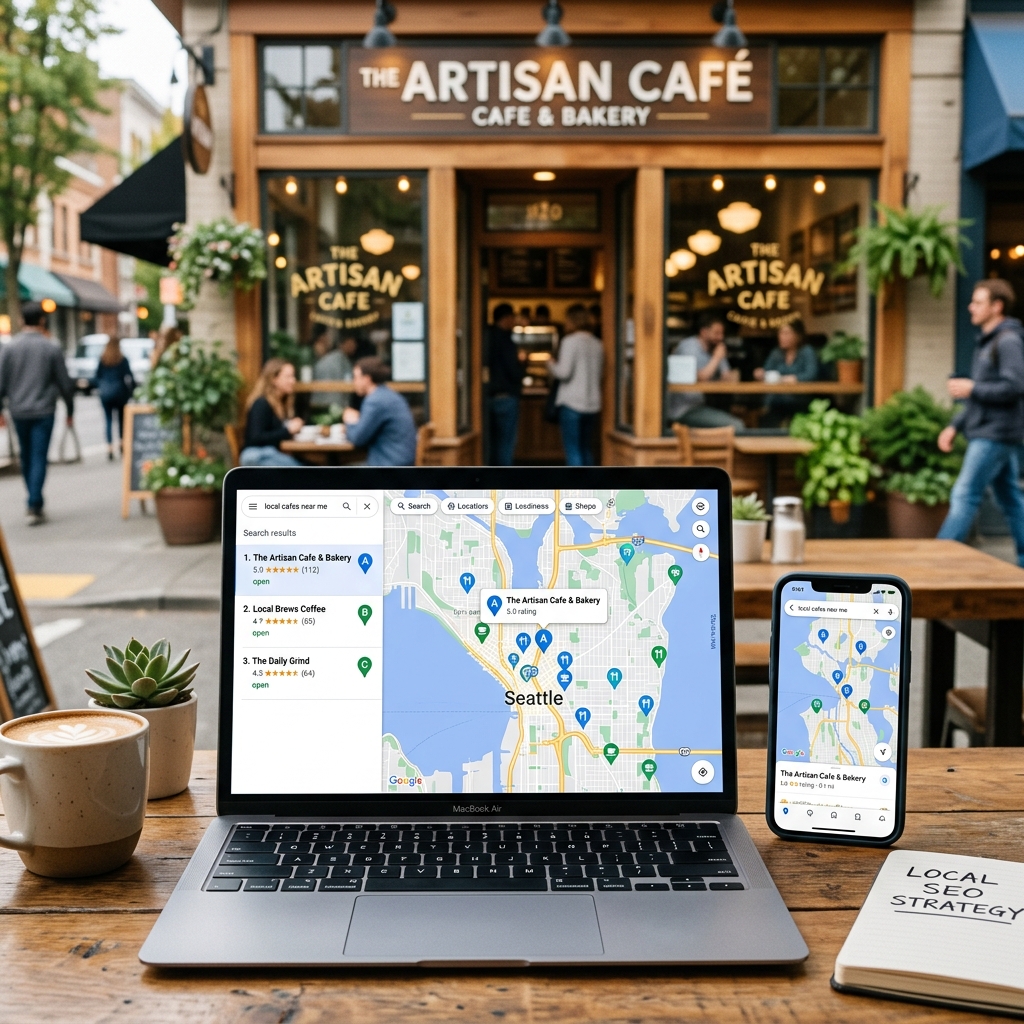
If you run a local business — a restaurant, law firm, dental practice, salon, or retail store — local SEO is the single most impactful digital marketing strategy you can invest in. When someone in your area searches for the services you offer, you want your business to appear at the top of those results. Here's a comprehensive guide to making that happen.
What Is Local SEO?
Local SEO is the process of optimizing your online presence to attract customers from local searches. These are searches with geographic intent, such as "plumber near me," "best pizza in Casper," or "dentist in WY." Google uses a different algorithm for local results, considering factors like proximity, relevance, and prominence.
Step 1: Optimize Your Google Business Profile
Your Google Business Profile (GBP) is the single most important local SEO factor. It's what appears in Google Maps and the local "3-pack" — the top three local results shown prominently in search.
Key optimizations:
- Complete every field in your profile — business name, address, phone, hours, website, categories
- Choose the most specific primary category for your business
- Add high-quality photos of your business, team, and products/services
- Write a compelling business description with relevant keywords
- Post regular updates, offers, and events through Google Posts
- Enable messaging to allow customers to contact you directly
Step 2: Build Local Citations
Local citations are mentions of your business name, address, and phone number (NAP) on other websites. Consistent NAP information across the web signals to Google that your business is legitimate and well-established.
Key citation sources:
- Yelp, Yellow Pages, BBB
- Industry-specific directories
- Local chamber of commerce websites
- Apple Maps, Bing Places, Facebook
Critical rule: Ensure your NAP is exactly the same everywhere. Even small inconsistencies (like "Suite 7000" vs. "Ste 7000") can hurt your rankings.
Step 3: Collect and Manage Reviews
Online reviews are a major ranking factor for local SEO and a key trust signal for potential customers. Businesses with more positive reviews tend to rank higher and convert better.
- Ask satisfied customers to leave a Google review (share a direct review link)
- Respond to every review — both positive and negative — professionally
- Don't buy fake reviews or incentivize reviews with discounts (against Google policy)
- Monitor review sites regularly and address negative feedback promptly
Step 4: Optimize Your Website for Local Keywords
Your website should clearly signal to search engines where you're located and what services you offer. Include local keywords naturally throughout your site:
- Title tags: "[Service] in [City] | [Business Name]"
- Meta descriptions with city and service mentions
- H1 and H2 headings with location-relevant keywords
- A dedicated "Service Area" or "Locations" page
- Embedded Google Maps on your contact page
- Schema markup for local business (LocalBusiness schema)
Step 5: Create Locally Relevant Content
Publishing content that's relevant to your local area helps establish your business as a local authority. Blog about local events, community involvement, local industry trends, and "best of" guides for your area.
Examples:
- "Top 10 Things to Do in [City] This Weekend"
- "How [Your Service] Benefits [City] Residents"
- "[Your Company's] Guide to [Local Event]"
Step 6: Build Local Backlinks
Backlinks from local websites carry significant weight for local SEO. Focus on getting links from:
- Local news sites and blogs
- Community organizations and nonprofits
- Local business partnerships and sponsorships
- Local university or school websites
Measuring Your Local SEO Success
Track these key metrics to measure the effectiveness of your local SEO efforts:
- Google Business Profile insights: Views, searches, calls, direction requests
- Local keyword rankings: Track how you rank for key local terms
- Organic traffic from local searches: Monitor in Google Analytics
- Review volume and rating: Aim for consistent growth in positive reviews
- Citation accuracy: Audit regularly with tools like Moz Local
Start Small, Be Consistent
Local SEO is a marathon, not a sprint. Start with your Google Business Profile, ensure your NAP is consistent, and focus on earning genuine reviews. Over time, these efforts compound to establish your business as the go-to provider in your local area.